
Aydem Energy VR
A nationwide travelling awareness project for primary school students — walking through a VR home, finding the energy-waste spots, fixing them and scoring points.
AYDEM ENERJİ · JUNE 2019
Brief
Aydem Energy had a clear goal in its social responsibility agenda: take energy-saving and sustainability awareness for primary school children far beyond the classic flyer-and-talk format. To do that, Aydem set up a programme that would visit primary schools one by one across Türkiye.
The brief came from Aydem: when you walk into a school, between bell and bell, every child in every classroom should be able to step through the same experience — something playful enough to feel like a game, but concrete enough to leave something behind. A programme that makes the child go home and say "mum, let's turn the lights off." Harikalar's job was clear: turn Aydem's educational frame into a VR game the child could step inside with their own body.
“For a child, "don't waste energy" only becomes real the moment they reach into a virtual home, switch off a forgotten light themselves, and earn the points for it.”
Insight
Telling a primary school student "don't waste energy" is about as effective as telling them "do your homework." For a child, this sentence isn't a rule to be discussed; it's a mistake they catch with their own eyes and fix with their own hand. That's why awareness lectures don't register in a child's gut — but a game score does.
That's where VR is strongest for this age group: the child sees the forgotten light not as a slide on a screen, but as a real light still burning in the living room of a virtual home. The thing they couldn't say to their mum at home, they can reach out and switch off in the game — and get points for it. Those points get bragged about later: "I had the highest score in class." That's the moment "energy saving" leaks into the child's everyday vocabulary.
The same insight forces a second thing: VR alone is not enough. A school visit means 200-300 children, a limited number of headsets. Without hands-on workshops and classic awareness activities for the kids waiting in line, the queue quickly turns into boredom and the message disappears. That's why VR sits at the heart of the school-day stage design — but never alone.
The Idea
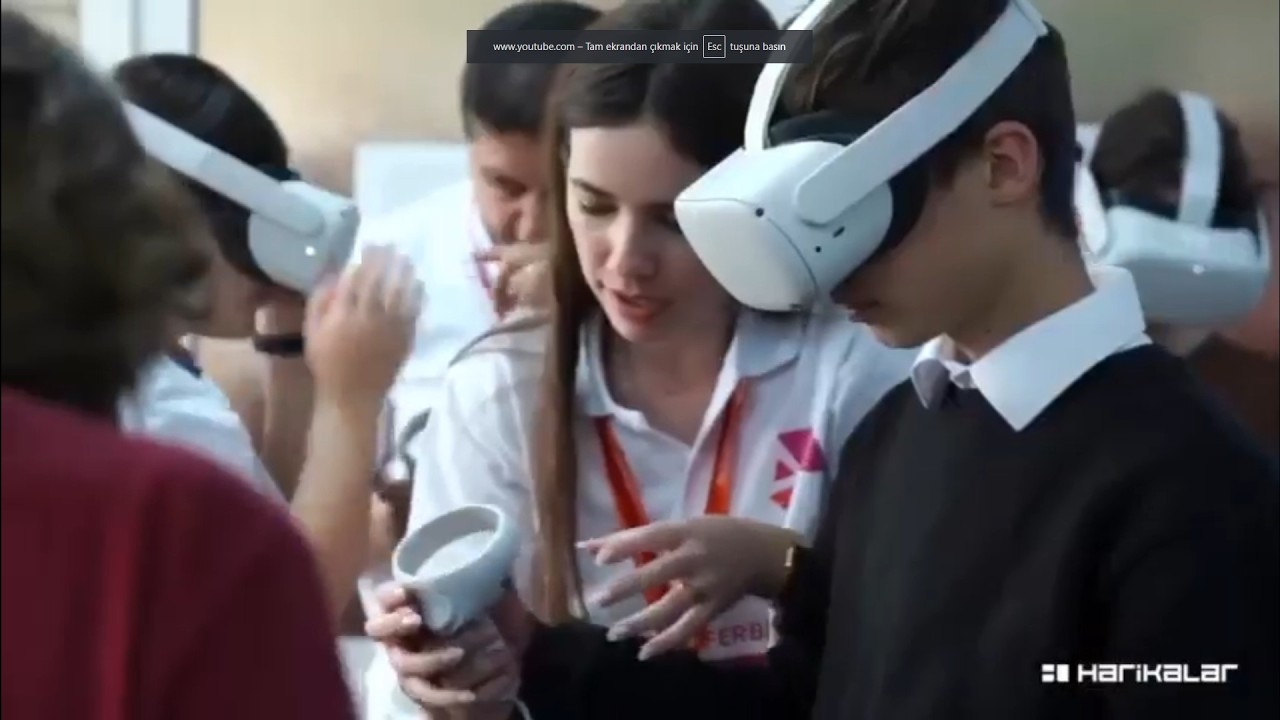
For Aydem Energy, we designed a VR energy-house game built to sit at the heart of a primary school visit. The child puts on the VR headset and finds themselves inside an everyday home: a living room, a kitchen, a bathroom, a child's bedroom. The mission is told in one line: "Find the energy waste in this house and fix it."
As the child walks from room to room, they meet scenes they recognise from their own life:
- In the living room, a lamp left on with no one in the room — touch it, switch it off, score.
- In the kitchen, a tap left running, a fridge door half-open, an appliance left plugged in — find each one, fix each one.
- In the bathroom, a dripping tap — close it.
- In the bedroom, an idle computer, a TV left on, a phantom-load charger — switch them off, unplug them.
Each correct action gets an instant point, an instant little celebration animation, an instant piece of feedback. The mission picks up pace — the more waste you catch before the timer runs out, the lower the home's daily energy use drops; at the end of the round, the game gives the child a concrete answer: "today, you saved this much energy."
Beyond being fun, the game does three things:
- It hands the child a list that maps directly onto their real life at home — the scene makes them say "I can do exactly the same thing when I get home."
- It rewards every correct action with points, feedback and small celebrations — it gamifies the rule.
- It leaves a score the child can tell the rest of the class about — they walk out of the headset carrying a story from inside the game.
Around the VR, hands-on workshops and additional awareness activities were designed with Aydem's educational team for children waiting in line. Throughout a school day, one group was inside the VR, another group at the workshop bench, another group answering questions about the game — no child was stuck in a "I'm waiting my turn" gap.
The brief and educational frame came directly from Aydem Energy; the VR game idea, scene design, 3D environments, game software and VR hardware setup were produced by Harikalar. To repeat the same quality across schools throughout Türkiye, the whole system was optimised for fast school-by-school deployment.
An Energy-Waste Hunt, Room by Room, in a Virtual Home
The child puts on the VR headset and finds themselves in the living room, kitchen, bathroom and bedroom of an everyday home. One line of mission: "Find the energy waste in this house and fix it." The scenes are full of details the child recognises from real life.
Forgotten Light, Dripping Tap, Phantom-Load Charger
The child reaches out and switches off a forgotten light, closes a dripping tap, unplugs a phantom-load charger, turns off a TV left on. Every correct action concretely lowers the home's daily energy consumption.
Instant Points, Instant Feedback, A Score to Brag About
Every correct action triggers an instant point and a small celebration. At the end of the round, the game tells the child "today you saved this much energy" in concrete terms. The score leaves the headset as a story they can tell the rest of the class.
VR + Hands-On Workshops + Extra Awareness Activities
VR alone is not enough. For the hundreds of children waiting their turn during a school visit, hands-on workshops and additional awareness activities were designed with the Aydem team. One group inside the VR, another at the workshop bench, another answering questions about the game.
Execution
The VR game idea, scene design, 3D production, game software, VR hardware setup and on-site support during school visits were developed end-to-end by Harikalar. The system was designed for fast build-and-strike so the same quality could repeat school by school across Türkiye.
Scope
- Translating Aydem's educational frame into VR game mechanics (scenes, missions, scoring, feedback)
- Production of the VR energy-home 3D scenes (living room, kitchen, bathroom, bedroom) and integration of interactive objects
- In-engine logic for catch-and-fix mechanics across light, water and appliance waste
- Instant points, feedback and an end-of-round "today you saved this much energy" summary screen
- On-site setup and school-friendly maintenance of the VR headsets
- On-site support across school visits — queue management, child flow, and the hands-on workshops that ran alongside the VR
Team
- Director & Experience Design: Atilla Baybara
- Technology & Software: Utku Olcar
- Operations: Yiğit Sarı
- Client Relations: Şaban Yılmaz
- + Mechatronic engineering, 3D / VR production, on-site setup & operations teams
Results
- A single awareness format travelling primary schools across Türkiye — the same VR game and the same workshop design repeated city to city, school to school, with the same clarity
- A concrete list children could carry into real life — scenes like a forgotten light, a dripping tap or a phantom-load charger leaked from inside the game into the child's everyday vocabulary
- "Energy saving" stopped being a lecture and became a game with points — what a teacher couldn't deliver alone, a lamp the child switched off with their own hand delivered
- VR sat at the heart of the school day, but not alone — hands-on workshops and extra activities turned the kids waiting in line from "waiting" into "participating"
- Aydem Energy's social responsibility agenda landed on the ground in a concrete way — a stage was built that lets a child go home and say "let's turn the lights off, mum"
- Client
- Aydem Enerji
- Brand
- Aydem Enerji
- Audience
- İlkokul öğrencileri
- Location
- Türkiye geneli ilkokul ziyaretleri
- Format
- VR enerji evi oyunu + dene-yap atölyeleri + ek farkındalık aktiviteleri
- Brief & Educational Frame
- Aydem Enerji
- VR Game, Production & Hardware
- Harikalar
- Project Lead
- Atilla Baybara
- Technology
- Utku Olcar
- Operations
- Yiğit Sarı
- Client Relations
- Şaban Yılmaz
Just a Brief.
Tell us about your project — we'll prepare a custom proposal.
Message Received!
Our team will get back to you shortly.